Sarguna-Natheswarar temple, TiruKaruviliKottidai
Location
Tiru-Karuvili-Kottidai (Sarguneswara-Puram)
Deity
Sarguna-Natheswarar
Female Deity
Sarvanga Sundari
Pathikam
Tirunaavukarasar -1
Gallery – Sarguna-Natheswarar Temple, Tiru-Karuvili-Kottidai


How to Reach
The shiva temple is situated about 22 km from Kumbakonam. One can travel via the Kumbakonam – Natchiarkoil – Poonthottam route to reach Koonthalur. From there, proceed north, cross the Arasalaru bridge, and continue for about 2 km to arrive at the temple. The Tirunallam Temple is located approximately 3 km to the north, while Tiru Anniyur Temple lies about 4 km to the north-east.
Temple Address
Karuveli (Sarguneswarapuram)
Eravancheri S.O.
Koondhalur Post
Kumbakonam Taluk
Thanjavur District
PIN – 605501
Temple Hours
Morning : 7:00 - 1:00
Evening : 4:00 - 8:00
Nearby Paadal Petra Shiva Temples
Temple Features
Temple Overview
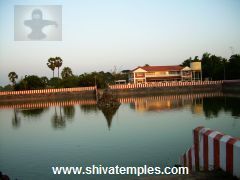
There is no separate sannidhi for the Navagrahas in this temple. The sacred theertham associated with this temple is known as Yama Theertham, which is located outside the temple complex. In the middle of the tank, there is a sculpture of Shiva bearing the River Ganga in His matted locks.
Name Significance
This place is also known as Sarguneswarapuram, as King Sargunan worshipped here and attained liberation from the cycle of birth. The name “Karuvili” signifies a state where one need not take birth again in a mother's womb, symbolizing the attainment of moksha.
Special Significance
Worshipping Sarguneswarar and Goddess Sarvanga Sundari at this temple is believed to bestow the ultimate blessing of moksha. According to tradition, Indra and the Devas worshipped the presiding deity here and were graced with divine blessings. It is also said that only those who are truly fortunate or destined only will be able to visit this temple. The sanctity of the temple is further affirmed by the Pathigam composed by Tirunavukkarasar in praise of the deity, which is found in the revered Tirumurai.
Temple Layout
Prakaram and Sannidhis
A beautifully adorned entrance gateway welcomes devotees into the temple. Passing through it, one enters a broad and open pathway that leads inward to the Nandi Mandapam. Beyond this stands the majestic east-facing, three-tiered Raja Gopuram.
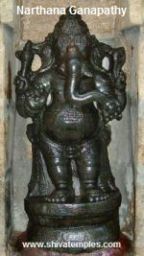
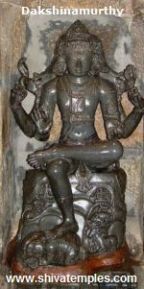
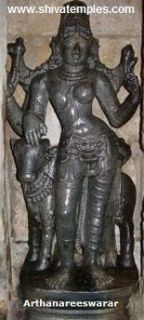
Entering through the gopuram, the sanctum of the presiding deity comes into view, along with an adjoining front mandapam. The outer prakaram houses sannidhis for Ganesha and Bala Subramanya. Along the outer walls of the sanctum are finely sculpted Goshta Murthas such as Narthana Vinayaka, Ardhanareeswarar, Dakshinamurthy, and Bhairava, noted for their antiquity and artistic detail.
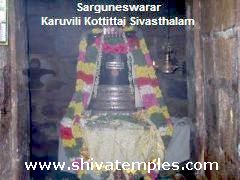
The mandapam in front of the sanctum houses sannidhis for Nataraja and Anjaneya. The presiding deity, revered as Sarguna Natheswarar, manifests in the sanctum in the form of a Shiva Linga.
Sarvanga Sundari
The sannidhi of the Goddess is located separately in the outer prakaram, on the right side. The Goddess, known as Sarvanga Sundari, lives up to Her name by appearing in exquisite beauty, facing east with four divine arms. According to the Sthala Purana, Her manifestation here is deeply connected to the legend of Daksha's yaga. Daksha, disregarding and disrespecting his son-in-law Shiva, conducted a grand sacrifice without offering the due ‘Havir-Bhagam’ to Him. Dhakshayini (Sati) arrived and urged her father to honor Shiva, but when he refused, she became enraged and cursed that his yaga be destroyed. In anguish, she immolated herself in the sacrificial fire. Grief-stricken and unable to bear the loss of His consort, Shiva came to the yaga-shala, lifted Sati's body, and performed a frenzied, grief-filled cosmic dance like one overcome with divine madness, causing the worlds to tremble. To restore cosmic balance, MahaVishnu released His Sudarshana Chakra, which cut Sati's body into pieces that fell across the land, forming the sacred 51 Shakti Peetas. Bereft of Sati, Shiva's dance ceased, and He remained in a state akin to deep, sorrowful trance. Sati was later reborn as Parvathi, the daughter of Himavan. Understanding Shiva's state of solitude, Parvathi came before Him in resplendent form as Sarvalankara Nayaki, manifesting here as Sarvanga Sundari — embodying all beauty — to draw His attention. Enchanted by Her divine grace, Shiva accepted Her, and their sacred union was restored.
Gallery