Mangaleswarar temple, Sirukudi
Location
Sirukudi
Deity
Mangaleswarar, Sookshma Pureeswarar, Sirukudi Eeswarar
Female Deity
Mangala Nayaki
Pathikam
Sambandar - 1
Gallery – Mangaleswarar Temple, Sirukudi
How to Reach
This shiva temple is located about 3 km to the west of Thirupamburam and it can be reached from Kollumangudi, which lies on the Mayiladuthurai–Tiruvarur road, via Thirupamburam. Alternatively, the temple can be accessed from Kumbakonam by travelling along the Kumbakonam–Natchiarkovil–Eravanchery–Poonthottam route. From Kadakambadi village on this route, one must cross the Arasalaru bridge and proceed north for about 3.5 km to reach the temple.
Temple Address
Sirukudi
Sarabhojirajapuram Post
Via Poonthottam
Kudavasal Taluk
Tiruvarur District
PIN – 609503
Temple Hours
Morning : 6:00 -
Evening : - 6:00
Nearby Paadal Petra Shiva Temples
Sthala Purana
Once, on Mount Kailasa, Shiva and Parvati engaged in a playful game of dice (Sokkattan), in which Parvati emerged victorious. Embarrassed by his defeat, Shiva disappeared from Kailasa. Distressed by his sudden absence, Parvati came to the sacred site of Sirukudi. There, she created the holy water body known as Mangala Theertham. Taking a handful of sand in her own hands, she fashioned it into a Shiva Lingam and worshipped it with deep devotion. Pleased with her sincere penance, Shiva appeared before her and accepted her once again. According to the temple's Sthala Puranam, the name "Sirupidi" (meaning "a handful") gradually evolved into "Sirukudi." It is also believed that since Shiva, who had become subtle and disappeared in Kailasa, re-manifested here, this place came to be known as Sookshmapuri, and the presiding deity as Sookshmapureeswarar. The deity is also revered as Sirukudi Eesar.
Temple Layout
Sannidhis and Rajagopuram
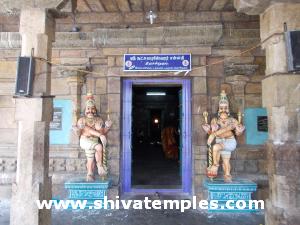
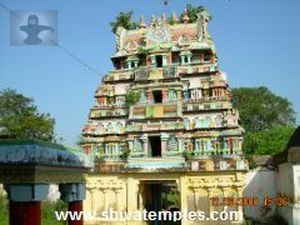
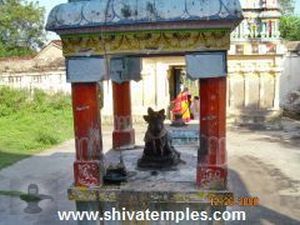
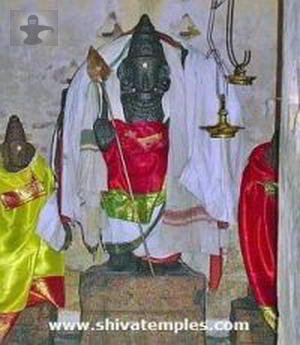
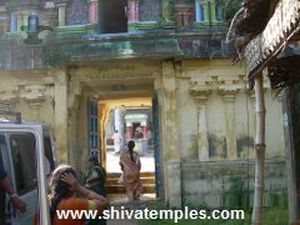
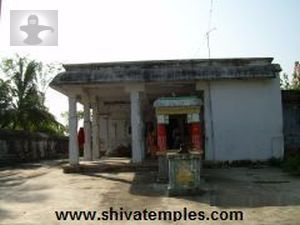
The temple features a three-tiered Rajagopuram facing east. Upon entering through the gateway, the Balipeetam and Nandi can be seen. Notably, this temple does not have a flagstaff (Kodimaram). In the outer prakaram, there are sannidhis dedicated to Mangala Vinayaka and Subramanya with his consorts Valli and Deivanai. In the front mandapam, there is a sannidhi for the Navagrahas. Beneath the idol of Shani, the name is inscribed as "Sanaicharan." The temple priests state that this is the correct name, meaning "the one who moves slowly," which, over time, evolved into "Saneeswaran." Nearby, there is a large and impressive idol of Thirugnanasambandar, beautifully adorned with a waist cord (arai-gnan kayiru) and a garland around his neck.
Goddess Sannidhi
In the front mandapam, there is a south-facing sannidhi for the Goddess, known as Mangalanayaki. She appears in a graceful standing posture, bestowing blessings with the Abhaya and Varada mudras. Notably, in this temple, the ritual of abhishekam is performed exclusively for the goddess.
Main Sanctum
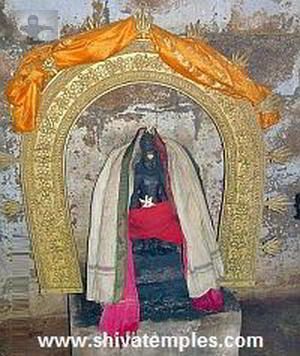
Proceeding through the front mandapam, one reaches the sanctum where the presiding deity, Sookshmapureeswarar, is enshrined. The Moolavar is a self-manifested (swayambhu) Linga. True to the name Sirukudi Eesar, the Lingam is very small—about the size of a handful. This is the sacred site where Parvati worshipped Shiva by shaping a Lingam from a handful of sand and creating the Mangala Theertham. Since the Lingam is formed of sand, the ritual of abhishekam is not performed to the presiding deity, but for the Goddess Mangalambika. A slight depression can be seen on the top of the linga, along with marks on either side, which are believed to have been formed when the Goddess embraced the deity. The Lingam is always kept covered with a protective kavacham. In the goshtas around the sanctum: Dakshinamurthy is seen on the southern side, Mahavishnu on the western side, and Brahma on the northern side. Unusually, instead of the typical Durga in the northern niche, Ardhanareeswarar is enshrined. There is also a sannidhi for Chandikeswarar. Around the sanctum, sannidhis for Mangala Vinayaka and Muruga with his consorts Valli and Deivanai are also present.
Angaraka Dosha Parihara
Among the utsava murthis, the Santhosha Alingana Murthi is particularly noteworthy. In this beautiful form, Shiva is seen joyfully embracing Ambikai, with his arm placed over her shoulder — a sight that is truly captivating. It is believed that Angaraka (the planet Mars) worshipped Shiva at this sacred site. Accordingly, there is a separate sannidhi for Angaraka in the temple. It is widely held that those afflicted with Sevvai dosham (Mars-related astrological affliction), especially those facing delays in marriage, can find relief by worshipping here. Worship of Angaraka is considered especially significant at this temple. Devotees traditionally bathe in the Mangala Theertham, located directly opposite the temple, before entering and offering prayers to Angaraka. This ritual is believed to help alleviate the effects of Mars-related doshas and bring well-being. Notably, people from other faiths also visit and offer their worship to Angaraka at this temple.
Tiru-gyanasambandar's Pathikam
This sacred temple is praised in a pathigam composed by Tirugyanasambandar, which is included in the 3rd Tirumurai. In the very first verse, he proclaims that those who worship the deity of Sirukudi will attain Sivalokam, the divine abode beyond this worldly existence. In the 11th verse of his hymn, he describes Sirukudi as "a place surrounded by groves cherished by honeybees." True to this poetic expression, even today, a beehive can be seen in a window of the temple mandapam, as if affirming his words.
Gallery