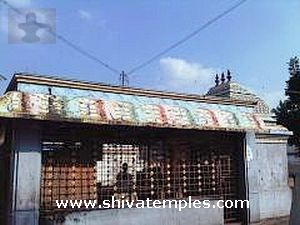
Vanmeekinathar temple, Tiruvarur
Location
Tiruvarur
Deity
Vanmeekinathar, Thyagarajar
Female Deity
Kamalambikai, Neelothpalambal
Pathikam
Tirunavukkarasar - 21, Sambandar - 5, Sundarar - 8
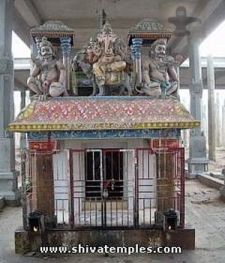
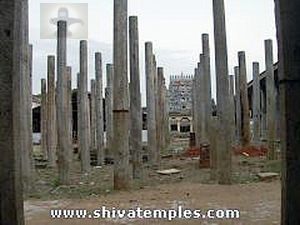
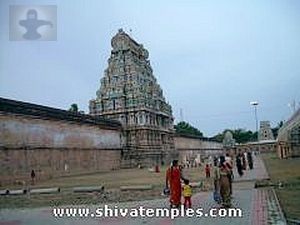
Vanmeekinathar Temple Photos
How to Reach
This Shiva temple is located in **Tiruvarur town**, which is well connected by bus services from Mayiladuthurai, Kumbakonam and Thanjavur. Another Paadal Petra Sthalam, known as Tiruvarur Araneri, is situated within the Vanmeekanathar Temple complex itself. Yet another Paadal Petra Sthalam, known as Aarur Paravaiyunmandali, is located on the eastern Ratha Veedhi (Chariot Street) of Tiruvarur town.
Temple Address
Tiruvarur
Tiruvarur Post
Tiruvarur Taluk
Tiruvarur District
PIN – 610001
Temple Hours
Morning : 6:00
Evening : 8:00
Nearby Paadal Petra Shiva Temples
Temple Significance
- Tiruvarur is a place where even being born here is believed to confer liberation (moksha).
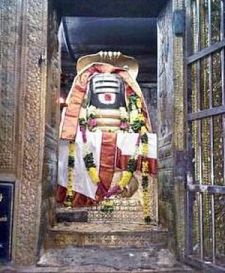
- Vanmeekanathar is believed to have chosen the snake anthill itself as His abode and resides in the sanctum as a Swayambhu Lingam.
- This is one of the largest Shiva temples, traditionally celebrated as having the temple and its sacred tank, Kamalalayam, each spread over five 'veli' of land (about 13 hectares).
- Tiruvarur once served as a capital city under kings such as Muchukunda Chakravarthi and Manu Needhi Chola.
- Tiruvarur is associated with 'Mooladhara' among the 'Saptha Vidanga' temples and associated with the Earth element (Prithvi) among the 'Pancha Bhoota' temples, and is also revered as a place that grants liberation.
- This is where Sundarar was blessed to retrieve from the Kamalalayam temple tank the gold he had placed in the Manimuktha River at Thirumudhukunram.
- At Sundarar’s request, Thyagaraja Himself walked through the streets of Tiruvarur at midnight to carry his message to Paravai Nachiyar.
- Sundarar lost the sight of both eyes after leaving Tiruvottiyur, having broken his promise to Sangili Nachiyar that he would not leave her. After regaining sight in his left eye at Kanchipuram, he came to Tiruvarur and regained sight in his right eye.
- Viranminda Nayanar, Nami Nandi Adigal Nayanar, Seruthunai Nayanar, Thandi Adigal Nayanar and Kazharsinga Nayanar have worshipped here and attained liberation.
- Thyagaraja shines here in all His splendour as the embodiment of the dance form 'Ajaba'. He is also believed to have gone to Ambar Makalam to attend the Yagna of Somasi Mara Nayanar and receive the avirbhaga, His share of the offering.
- The temple has so many sannidhis that, once inside, one can hardly find room or time to stretch out one’s folded hands in worship.
- Tiruvarur has a distinction unlike any other Shiva temple: it is the only place whose temple, temple tank, streets and temple car festival are all celebrated in the Tevaram hymns.
Temple Layout & Special Features
Temple Layout and History
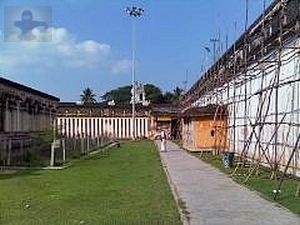
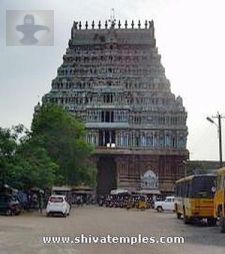
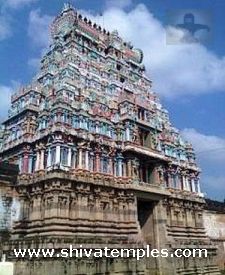
The Thyagaraja Temple is one of the largest temples in India. The antiquity of the Tiruvarur temple is so great that Thirunavukkarasar expressed wonder in his Tevaram hymn, saying that it was impossible to determine when this temple first came into existence. Among the seven Saptha Vidanga temples, Tiruvarur is regarded as the foremost and principal one. The other Six Vidanga temples associated with Tiruvarur are Tiru-Marai-Kadu, Tiru-Nallar, Tiru-Kuvalai, Tiru-Nagai-Karonam, Tiru-Karavasal and Tiru-Vaymur. The temple is adorned by a magnificent Rajagopuram, and the complex stands within massive walls about 30 feet high, enclosing an area measuring approximately 656 feet from north to south and 846 feet from east to west. There are gateways on all four sides, and the temple is laid out with five prakarams, including the streets around the temple through which the famous 'Tiruvarur Ther' passes. Tiruvarur is especially renowned for the traditional description that the temple, the Kamalalayam tank in front of it and the temple garden each occupy an area of five veli. The old saying, “The temple is five veli, the tank is five veli, and the Sengazhunir Odai is five veli,” conveys the vastness and grandeur of the sacred complex. One veli is traditionally described here as an area measuring approximately 1,000 feet in length and 700 feet in breadth. History records that Sembiyan Mahadevi, the wife of the later Chola king Kandaraditya Chola, converted the temple into a stone-built temple, and that it was subsequently enlarged and expanded during the reign of the Kulothunga Chola kings.
Durga and the Navagrahas
There are eight dedicated sannidhis to different forms of Durga within the Tiruvarur temple complex. The Mahishasuramardhini in the first prakaram is the principal sannidhi for Durga. Two more sannidhis for Durga are also located in the first prakaram. Four are found in the second prakaram and another is located within the Kamalambikai sannidhi, making a total of eight Durga sannidhis in the temple. Another unique feature of Tiruvarur is the arrangement of the nine Navagrahas. Here, the nine planets are believed to be under the command of Thyagaraja and are placed in a single row towards the south, facing the Thyagarajaswamy. The sight of all nine Navagrahas standing together in a single row is a distinctive feature of this temple.
Sannidhis of Significance
Vanmeekanathar and Thyagaraja
Vanmeekanathar faces east. The gopuram leading to His sanctum is known as the Azhagiyan Gopuram. Stucco images of Dwarapalakas stand guard at the entrance, while Adhikara Nandi can be seen on the northern side, at the centre of the gateway. On entering the prakaram and proceeding clockwise, one encounters sannidhis dedicated to Pradoshanayaka, Chandrasekharar, the Chola king, Manickavasagar, Tripurasamhara and Aingalakkasu Vinayaka, among others. To the right of the Vanmeekanathar's sanctum is the sannidhi of Thyagaraja, the principal deity of Tiruvarur. The Goddess accompanying Thyagaraja is known as Kondi. To the right of the Thyagesar sannidhi is a pedestal bearing a casket containing the emerald Shiva Lingam of Veedhi Vidangar. This Lingam alone receives abhishekam every morning and evening. Only the face of Thyagaraja is visible. Devotees are blessed with the darshan of His left foot during the Margazhi Thiruvathirai festival and His right foot during the Panguni Uthiram festival. The rest of the deity remains covered and is regarded as highly sacred and esoteric.
Kamalambikai
The sannidhi of Kamalambikai is situated in the northwestern part of the third prakaram and faces east. The Goddess is seated in a yogic posture, wearing the crescent moon and the Ganga in Her matted hair, in the manner of Her consort Sarveswara. Tiruvarur Kamalambikai is revered as one of the Shakti Peetams, and in the western corner of the Goddess's shrine is the Akshara Peetha. It consists of the sacred pedestal and a sacred aureole inscribed with the fifty-one Sanskrit letters. Devotees are expected to stand here in meditation before proceeding. Worshipping the Goddess on Aadi Pooram, Aadi Fridays and Thai Fridays is considered auspicious.
Neelothpalambal
Here, the Goddess appears as Adi Shakti with two arms. She is known as Alliyankothai in Tamil and Neelothpalambal in Sanskrit. Her form here is unique and is not seen elsewhere. To the left of the Goddess stands a woman carrying a young boy seated on her shoulder. The Goddess's left hand appears to rest protectively upon the boy's head, and the entire composition has been carved from a single stone. In Her right hand, the woman holds a water-lily flower. Such an unusual form of the Goddess is not found elsewhere. The sanctum also has a Palliyarai, or sacred bedchamber, adding to the uniqueness of this shrine.
Raudra Durga
Raudra Durga is worshipped especially by young women and men who have reached marriageable age and are facing prolonged obstacles to marriage. Devotees offer special worship to Her during Rahu Kalam and seek Her blessings for the removal of such obstacles.
Rana Vimochana Swamy
The Sanskrit word “Run” means debt, while the Tamil word “Rana” refers to a wound. Rana Vimochana is so called because devotees believe that He relieves them from long-standing debts as well as persistent illnesses. Worshipping Him on the new moon day (Amavasya), with abhishekam and offerings of salt and pepper, is considered especially beneficial. Although the temple prakaram has become slightly worn in places due to the salt offerings made by devotees, the Shiva Lingam of Rana Vimochana remains unaffected and continues to bless devotees.
Vanmeekinathar Temple Photos