Veeratteswarar temple, Tiruvirkudi
Location
Tiru-Virkudi
Deity
Veeratteswarar
Female Deity
Elavaarkuzhali
Pathikam
Sambandar - 1
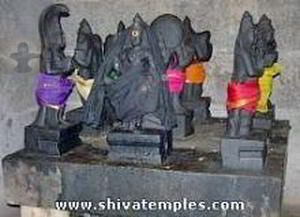
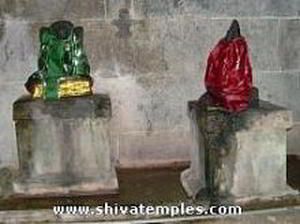
Gallery – Veeratteswarar Temple, Tiruvirkudi


How to Reach
This Shiva temple is situated approximately 11.5 km from Tiruvarur. From Tiruvarur, travel along the Tiruvarur–Mayiladuthurai road up to Surakkudi, then take a right turn to reach Tiruvirkudi. The temple is easily accessible by both bus and private vehicles from Tiruvarur.
Temple Address
Nearby Paadal Petra Shiva Temples
Sthala Puranam
The Slaying of Jalandhasura – An Ashta Veeratta Sthalam
Thiruvirkudi is one of the revered Ashta Veeratta temples, associated with the heroic deeds of Shiva. Jalandhasura, a powerful demon, performed intense penance and sought immortality from Brahma. Since Brahma could not grant such a boon, Jalandhasura instead requested that his death should occur only when the chastity and unwavering devotion of his wife, Brinda, were compromised. Blessed with this boon and immense strength, he grew arrogant and began tormenting the Devas. Unable to bear his oppression, the Devas sought refuge in Shiva at Mount Kailash.
Determined to protect the Devas, Shiva devised a plan. He instructed Maha Vishnu to assume the form of Jalandhasura and appear before Brinda. Believing the disguised Vishnu to be her husband, Brinda welcomed him, and in that brief moment her steadfast mental fidelity was disturbed. At the same time, Shiva appeared before Jalandhasura in the guise of an aged Brahmin and challenged him to perform a seemingly simple task. Drawing a circle on the ground with His toe, Shiva asked the demon to lift it and hold it above his head. Confident in his strength, Jalandhasura accepted the challenge and, after great effort, managed to raise the circular disc. Since Brinda’s chastity had already been compromised, the protective power of her virtue was lost. The divine disc immediately split Jalandhasura into two and returned to Shiva. By destroying Jalandhasura in this manner, Shiva demonstrated His heroic valor, and this temple came to be celebrated as one of the sacred Ashta Veeratta Sthalams.
Brinda’s Curse and the Origin of Tulasi
Grief-stricken by her husband’s death, Brinda cursed Maha Vishnu, saying, “Just as I suffer the pain of separation from my husband, you too shall experience separation from your wife.” It is believed that this curse later manifested during Vishnu’s incarnation as Rama, when He was separated from Sita. After uttering the curse, Brinda entered the sacrificial fire and gave up her life.
As a consequence of Brinda’s curse, Maha Vishnu was overcome with deep sorrow and mental anguish. To relieve Him of this suffering, Shiva sowed a sacred seed at the spot where Brinda had immolated herself. From that place emerged the Tulasi plant. A garland woven from its leaves was offered to Maha Vishnu, restoring His peace of mind. In remembrance of this divine event, Tulasi is revered as the sacred Sthala Vriksha (temple tree) of this temple.
Temple Structure
Temple Layout and Sacred Theerthams
The temple’s Rajagopuram rises majestically with five tiers. Directly opposite the temple lies the Chakra Theertham, a large tank with well-constructed bathing steps and enclosing walls. A sannidhi dedicated to Vinayaka stands on its bank. This temple is associated with two sacred water bodies: Chakra Theertham in front of the temple and Sangu Theertham situated behind it.
Other Deities
Upon entering through the Rajagopuram, visitors can see an exquisite sculpture of a Naga-Linga carved on the first pillar to the right. The outer prakaram contains the sacred spot where Shiva transformed Brinda into the Tulasi plant for the benefit of Maha Vishnu, as well as a Shiva Linga worshipped by Vishnu Himself. Proceeding through the inner prakaram, devotees can worship sannidhis dedicated to Mahalakshmi, Subramanya with Valli and Deivanai, Bhairava, Sani Bhagavan, the Navagrahas, Surya, and the sacred well known as Gnana Theertham. Sannidhis for village guardian deities such as Pidari and Mariamman are also located within the temple complex.
Presiding Deity and Goshta Murthis
One of the notable features of this temple is the Urchava Idol of Shiva as the destroyer of Jalandhasura, depicted holding the divine discus in His right hand, while carrying the deer and battle axe in His other hands. After offering prayers to the Dwarapalakas, Dwara Ganapati, and Subramanya, devotees reach the sanctum where the presiding deity appears as a self-manifested (Swayambhu) Lingam. The Lingam, enshrined upon a square pedestal, has a distinct rounded form. The Goshta deities around the sanctum include Brahma, Mahavishnu, Dakshinamurthy, and Narthana Vinayaka. A separate sannidhi for Chandikeswarar is also present.
Goddess and Nataraja Sabha
The sannidhi of the Goddess is located to the left of the main sanctum and faces south. The Goddess is enshrined in a graceful standing posture, bestowing blessings upon devotees. Opposite this sannidhi, the ceiling of the mandapam is adorned with representations of the twelve zodiac signs arranged in their traditional order. The temple’s Gomukha, through which the abhisheka water flows, is uniquely designed in the form of a female figure bearing its weight. To the left of the mandapam is the Nataraja Sabha, while a southern entrance and window stand opposite it. Nearby, the temple’s treasured festival deities are carefully preserved.
Temple Highlights
Muruga in Thiruppugazh
The Saint-Poet Arunagirinathar has glorified the Muruga of this temple in his revered Thiruppugazh hymns. One hymn in the Thiruppugazh is dedicated to this Muruga. Here, Muruga is enshrined facing east, seated gracefully upon His peacock mount with a single face and four arms, accompanied by His divine consorts, Valli and Deivanai.
Thevaram Hymn of Thirugnana Sambandar
The pathikam composed by Tirugyana Sambandar is in Second Thirumurai. In the concluding verses of this pathikam, he extols the spiritual benefits gained by those who recite it daily. He declares that devotees who chant these hymns with devotion will be freed from the effects of their karmic deeds, protected from misfortunes and obstacles, and blessed with a life free from sorrow and suffering. The hymn further assures that afflictions and hardships will not approach those who seek refuge in the grace of the deity through its recitation.
Ashta Veeratta Sthalam
The temples where Shiva is believed to have performed his dance of valor are collectively known as the Ashta (Eight) Veeratta Temples. All eight of these temples are located in Tamil Nadu.
More Gallery – Veeratteswarar Temple, Tiruvirkudi