Meghanathaswamy temple, Tiru-Meeyachur
Location
Tiru-Meeyachur
Deity
Meghanathaswamy
Female Deity
Soundara Nayaki, Lalithambikai
Pathikam
Sambandar - 1
Gallery – Meghanathaswamy Temple, Tirumeeyachur
How to Reach
This Shiva temple is located about 19 km from Mayiladuthurai, near Peralam in the Tiruvarur district. The temple lies approximately 2 km from Peralam. Another notable feature is that within the same temple complex there is another 'Paadal Petra Sthalam' known as Tirumeeyachur Ilankovil, making this site spiritually unique as it houses two Shiva temples within a single complex..
Temple Address
Tirumeeyachur
Peralam Post
Near Nannilam
Via Peralam
Tiruvarur District
Temple Hours
Morning : 6:00 - 12:00
Evening : 4:00 - 8:00
Nearby Paadal Petra Shiva Temples
Nearby Divya Desams
Temple Layout
In Tamil Nadu, the Chola king Kochengat Chola earned great fame in the Chola dynasty by constructing 70 Maadakovils (temples built on an elevated platform so that elephants could not enter). One among these is the Thirumeeyachur Temple, located about 2 km from Peralam, near Nannilam in the Tiruvarur district, on the banks of the sacred Kaveri River. Another unique feature of this ancient temple complex is that it houses two ‘Paadal Petra’ temples within the same premises — the historic main temple at Thirumeeyachur and the Thirumeeyachur Ilankoil, both of which add to the spiritual and historical significance of the site.
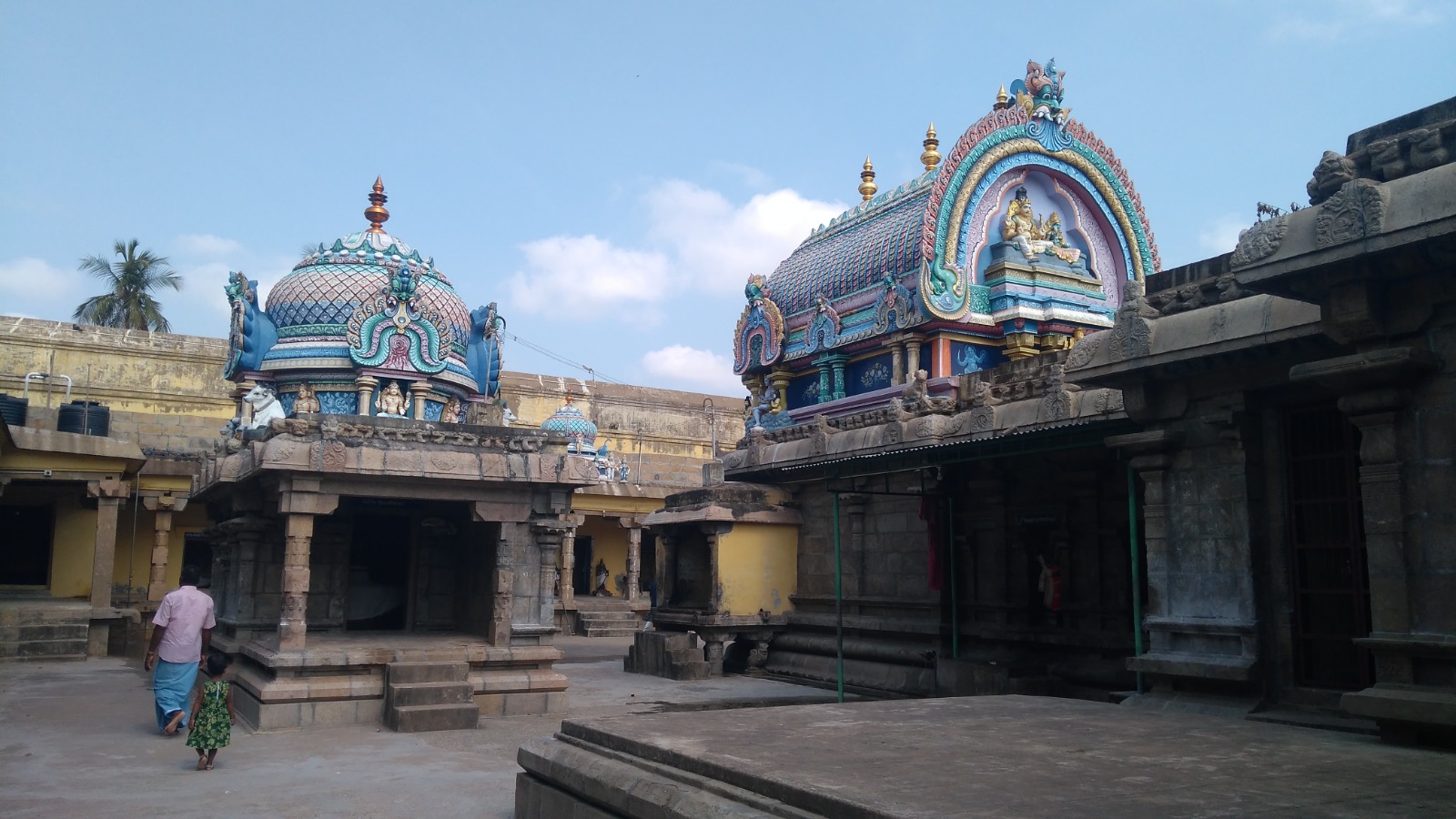
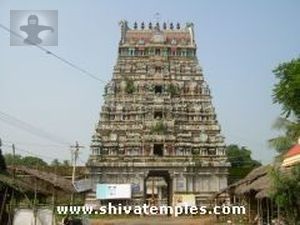
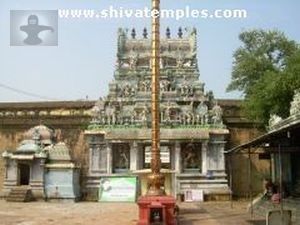
The stone temples of the Chola period are renowned for their exquisite sculptures, and this temple beautifully showcases that artistic excellence. One of the most striking architectural features of the Thirumeeyachur Temple is its unique Vimana design, built in the distinctive Gajaprishta style, resembling the back of an elephant, and crowned with three kalasams. The temple’s Rajagopuram rises with five tiers, while the second gopuram has three tiers. The temple complex also includes two prakarams (circumambulatory corridors), adding to its traditional Dravidian grandeur.
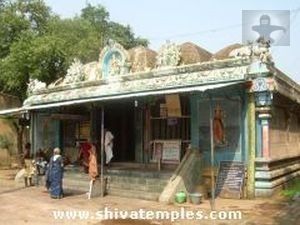
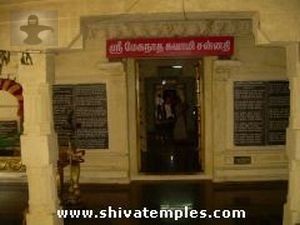
As one enters the temple, the sannidhi of Lalithambikai is located on the right side. In the Mahamandapam, there is a sannidhi for Ratha Vinayaka. Within the inner prakaram, devotees can see the sannidhi of the Nagar (serpent deity), along with images of Sekkizhar and the Nalvar — the four great Saivite saints: Tirugnanasambandar, Tirunavukkarasar, Sundarar, and Manikkavacakar. The inner prakaram also houses several Shiva Lingas believed to have been worshipped by the Sapta Matrikas, as well as Lingas worshipped by Agni, Yama, and Indra.
Presiding Deity – Meghanathar
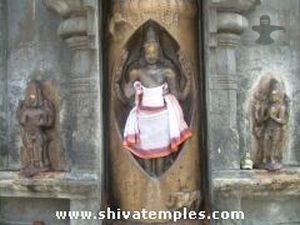
At the Thirumeeyachur Temple, the presiding deity Meghanathar appears in the form of a Swayambhu Linga (self-manifested Shiva Linga). Surrounding the garbhagriha (sanctum) where the Lord is enshrined are several beautifully designed mandapams. The stone pillars, along with the finely carved Ganesha sculptures depicted as Dwarapalakas (guardian figures), reflect the remarkable artistic excellence of Chola-period temple architecture. These intricate carvings and structural elements stand as fine examples of the sculptural mastery of the Chola era.
Goddess Lalithambika
After coming out of the inner prakaram, one can see the shrine of the goddess Lalithambikai located in the outer prakaram, seated facing south. She is also reverentially known as Soundaryanayaki. The goddess is seated majestically on a royal throne placed upon the Sri Chakra Peetam, symbolizing her supreme divine power. She grants blessings with the Abhaya and Varada hasta mudras.
In this rare posture, the goddess folds her right leg while letting the left leg hang down — a depiction that is extremely uncommon. Such an extraordinary and artistically unique form of the goddess is rarely seen, and it is believed that no other temple in the world possesses a divine idol with such remarkable sculptural beauty and distinctive posture.
The goddess, who appears in a serene seated posture, radiates a calm and graceful presence, and her abode gives devotees the feeling of being in a royal court (Raja Darbar). Devotees who visit this temple and recite the Lalitha Sahasranama and Lalitha Navaratna Malai are believed to receive the complete grace and blessings of the Goddess. Performing sacred rituals such as the Ayushya Homa and the Mahamrityunjaya Homa at this temple is considered highly auspicious. It is also believed that if devotees offer ‘Pirandai’ rice to the deity on a lotus leaf and perform Annadhanam (feeding devotees), they will be blessed with long life and relief from various illnesses.
Sthala Purana
Surya’s Curse
According to temple legend, Surya was once cursed by Shiva, which caused his radiant body to lose its brilliance. Seeking relief from this curse, Surya came to Thirumeeyachur and performed intense penance for seven months. However, when his complexion did not change even after this long period of austerity, he cried out loudly in distress, praying for mercy. At that time, Parvati was in private with Shiva. The loud cry of Surya disturbed their solitude, and Parvati initially intended to curse him for interrupting their sacred moment. However, Shiva intervened and requested her to remain calm, reminding her that Surya was already suffering because of the earlier curse. Listening to Shiva’s words, Parvati’s anger subsided and she assumed a peaceful form, becoming known as Shanthanayaki, the embodiment of serenity and compassion.
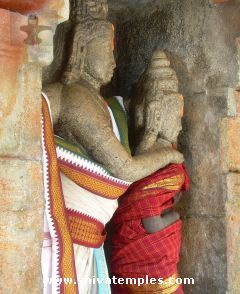
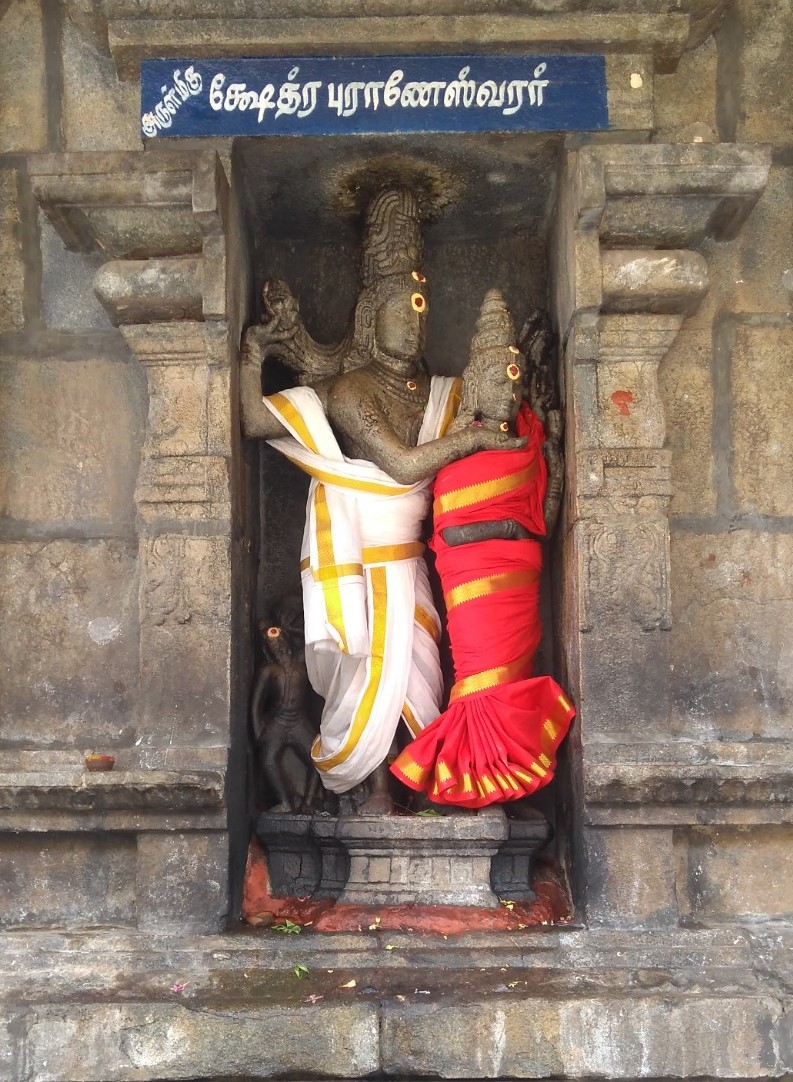
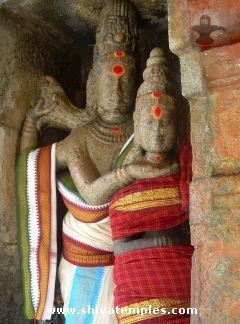
According to temple tradition, when Shiva requested her to remain calm, from the goddess Shanthanayaki’s divine mouth emerged the Vāk Devatas, beginning with Vasini, who praised the goddess with sacred hymns. These hymns, consisting of one thousand divine names, later came to be known as the Lalitha Sahasranama. Depicting this sacred episode, a rare and beautiful sculpture can be seen beneath the temple vimana on the southern side, where Kshetra Puraneswarar is portrayed gently holding the chin of Parvati and requesting her to remain calm as Shanthanayaki. Such a unique and expressive sculptural representation is considered extremely rare and is seldom found in any other temple.
This remarkable sculpture has a unique artistic feature. When viewed from one side, the goddess Parvati appears to be angry. However, when the same sculpture is viewed from another angle, the goddess appears calm and graceful, with a gentle and modest expression. This extraordinary piece of temple sculpture beautifully captures two contrasting emotions in a single form, and it is truly a work of art that must be seen in person to be fully appreciated.
Sun’s Worship
It is believed that every year, from the 21st to the 27th day of the Tamil month Chithirai, during sunrise, the Sun God Surya offers special worship to the presiding deity Meghanathar. During these seven days, the sun’s rays fall directly on the Shiva Linga inside the sanctum (garbhagriha). Even today, devotees can witness this remarkable phenomenon, where the sunlight enters the temple and illuminates the Linga, symbolically representing Surya’s worship of the presiding deity.
Health Significance
According to temple tradition, Yama worshipped the Shiva Linga at this temple by performing 1008 Shankha Abhishekams (ritual ablutions using conch shells) and received many blessings. Because of this sacred legend, it is believed that devotees who suffer from incurable illnesses can perform 1008 Shankha Abhishekam to the presiding deity Meghanathar. By doing so, they are believed to receive the grace of Yama, be relieved of their ailments, and regain good health.
Gallery