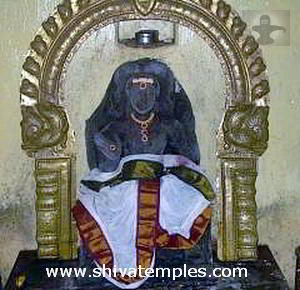
Mathi-Muktheeswarar temple, Tiru-Thilathai-Pathi
Location
Tiru-Thilathai-Pathi (Shathala Pathi)
Deity
Mathi-Muktheeswarar
Female Deity
Porkodi Nayaki, Maragatha-Valli, Swarna-Valli
Pathikam
Sambandar - 1
Gallery – Madhimutheeswarar Temple, Tiru-Thilathai-Pathi
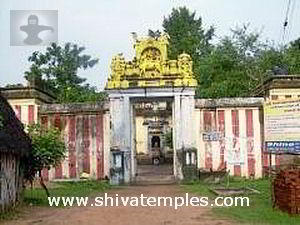
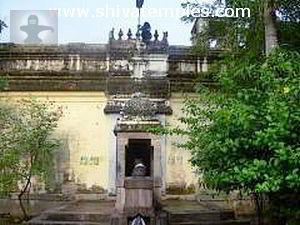
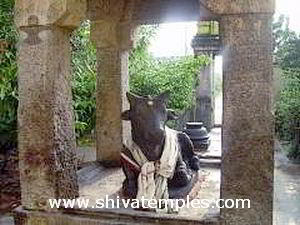
How to Reach
This Shiva temple is located approximately 25 km from Mayiladuthurai. Take the Mayiladuthurai–Thiruvarur road to reach Poonthottam village, from where the temple is about 3 km away.
Temple Address
Tiruthilathaipathi
Poonthottam Post
(Sethalapathi/Thilatharpanapuri)
Via Poonthottam
Tiruvarur District
PIN – 609503
Temple Hours
Morning : 7:00 - 12:45
Evening : 4:00 - 8:30
Nearby Paadal Petra Shiva Temples
About the Temple
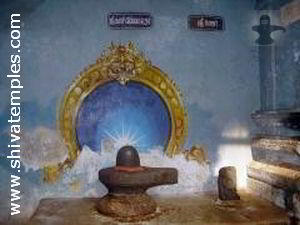
The presiding deity of this temple is Mathi-Muktheeswarar (also known as Muktheeswarar, and the Goddess is Porkodi Nayaki (also called Maragathavalli and Swarnavalli). The pathigam for this temple was composed by Tiru-Gyana-Sambandar and is found in the 2nd Thirumurai.
The temple has an east-facing entrance with iron-barred doors. Inside are the kodimaram and Nandi, and beyond the inner gateway lies the main hall with a direct view of the presiding deity. The sannidhi of the Goddess is situated to the right.
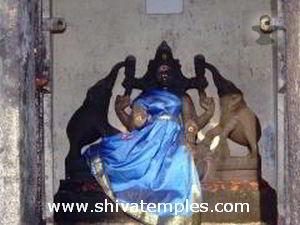
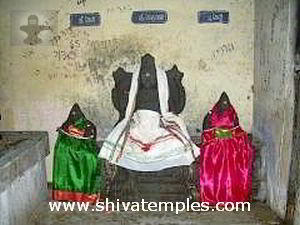
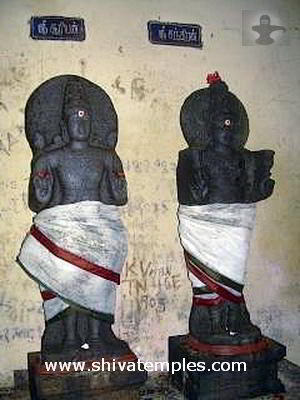
In the prakaram are sannidhis for Vinayaka, Rama and Lakshmana, the lingams consecrated by them, Arumukha, Gajalakshmi, the Navagrahas, Bhairava, the Nalvar, and Surya and Chandra. The goshta deities include Vinayaka, Dakshinamurthy, Mahavishnu, Brahma, and Durga.
Sthala Purana
Divine Dance at Kailasa and Brahma's Curse
Once, on Mount Kailasa, a grand assembly of Devas, sages, and celestial beings—including Indra, Varuna, and Vayu—gathered to witness Shiva's cosmic dance. Heavenly maidens such as Rambha, Urvashi, and Menaka were also present. After the magnificent performance, Shiva, along with Parvati, blessed all assembled. In that moment of exhilaration, Vayu blew with great force, creating a sudden whirlwind. Amidst the gust, Urvashi's garment shifted slightly, and Brahma, who stood nearby, inadvertently beheld it and was momentarily overcome by desire. Witnessing this lapse, Shiva grew displeased and cursed Brahma to be born on Earth. Stricken with remorse, Brahma sought forgiveness through earnest prayers. Moved by his devotion, Shiva instructed him to perform sincere worship at Thilathaipathi and assured that, in due course, he would be released from the curse.
Brahma's Redemption and Parvati's Penance
Brahma came to Thilathaipathi, where he created a sacred water body in his own name and performed abhishekam to Shiva. At the same time, Parvati—who had been humiliated earlier at Daksha's yajna—arrived here to atone. To rid herself of that disgrace, she undertook deep penance and an anthill had grown around, concealing her completely. Learning of her presence, Brahma carefully opened the anthill, upon which the Goddess revealed herself. Worshipping both Shiva and Parvati with deep devotion, Brahma was relieved of his curse and blessed by them. Even today, Thilathaipathi is revered as a temple that removes sins and grants spiritual attainments (siddhis).
Significance for Pitru Rituals
A king named Narjyothi once sought to perform sacred rites for his ancestors. Determined to find a place where the departed souls would directly receive the offerings, he travelled far and wide performing rituals. At Thilathaipathi, his ancestors are believed to have appeared and personally accepted the pinda that he offered. Because of this event, the temple is regarded as highly sacred for Pitru rituals. Even today, many devotees visit this temple to perform ancestral rites with deep faith.
Seven places for Ancestral Rites
Seven places are considered especially significant for tarpanam and ancestral rites: Kashi, Rameswaram, Srivanchiyam, Thiruvengadu, Thilatharpanapuri (Sethalapathi), Gaya, and the Triveni Sangam at Allahabad. Among these, this temple holds the fifth position in importance. A unique feature here is that there is no need to wait for specific days such as Amavasya, tithi, or nakshatra. Devotees can perform ancestral rites and tarpanam on any day, making it an accessible and powerful place for honoring ancestors.
Rama's Tarpanam and Muktheeswarar
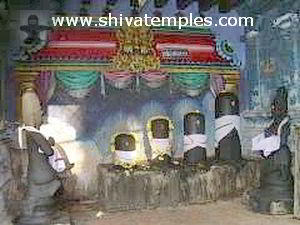
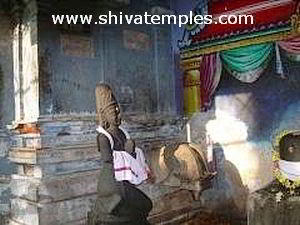
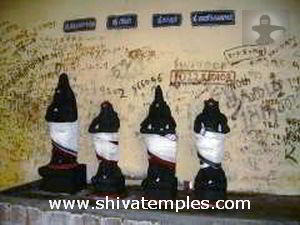
This temple is associated with the episode where Rama and Lakshmana performed tila tarpanam for Dasaratha and Jatayu. Pleased with Rama's devotion, Shiva granted liberation to Dasaratha, and hence the presiding deity came to be known as Muktheeswarar. During the ritual, Rama offered four pinda for—Matha, Pitha, Guru and Deiva (Mother, Father, Guru, and God)—which later transformed into Shiva lingams. These lingams, along with sculptures depicting Rama and Lakshmana performing the rites, can be seen in the prakaram behind the sanctum. It is also believed that Surya and Chandra too have worshipped the deity Madhimuktheeswarar.
Temple Deities
Unique Forms of Dakshinamurthy and Aadhi Vinayaka
Dakshinamurthy appears here in a rare form, with his foot placed upon the asura Muyalaka, flanked by squirrels, while the four Sanakathi sages are depicted in penance nearby. Another notable feature is the sannidhi of Aadhi Vinayaka at the entrance. Believed to represent Ganesha before acquiring the elephant head, he appears in a human-faced form without a trunk. Seated with one leg folded and the other hanging, his left hand rests on the knee while the right hand is in a gentle abhaya gesture.
Muruga and Thiruppugazh
Arunagirinathar has sung in praise of Muruga of this temple in the Thiruppugazh. Here, Muruga appears in a standing posture facing east, with a single face and four arms, accompanied by his two consorts.
Three Forms of Mahavishnu
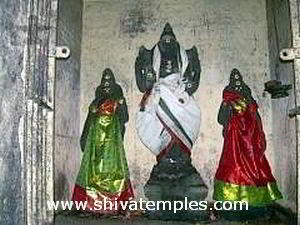
Mahavishnu is seen here in three distinct forms: as Rama performing Shiva worship, as a standing form in the koshta where Lingodbhava is usually found, and as a seated form facing north with Sridevi and Bhudevi near the Navagraha shrine.
Sacred Arisil River
One of the temple's theerthams, the Arisil River, flows from north to south (Uttaravahini), which is considered highly auspicious. Worship at temples along such rivers is believed to bring prosperity and well-being. It is also said that Rama bathed in this river, performed Shiva worship, and conducted ancestral rites for Dasaratha here.
Pathigam
The pathigam composed by Thiru-Gyana-Sambandar is found in the 2nd Thirumurai. He states that those who recite this hymn daily with devotion will attain the feet of Shiva. He also refers to this place as “Madhi Mutham,” emphasising its spiritual greatness.
Gallery